19 Jan 2011

Modernist film and Talk: 'Franco Albini and Museums design in Genoa in the 1950's'


'New Museum: Franco Albini and Museum Design in Genoa in the 1950s'
Tuesday 8 March 2011 at 18.45 (doors open at 18.00) at Estorick Museum, London

'New Museum' is the latest 16mm film by artists Graham Ellard and Stephen Johnstone.
Focussing on the radical, Modernist exhibition designs of Franco Albini and his collaboration with museum director Caterina Marcenaro in the early 1950s, the film features material shot in the galleries of the Palazzo Bianco and Palazzo Rosso in Genoa. The screening will be accompanied by a discussion between the artists and Professor Robert Lumley of University College London. Tickets £8 or £5 for full-time students and Estorick members.


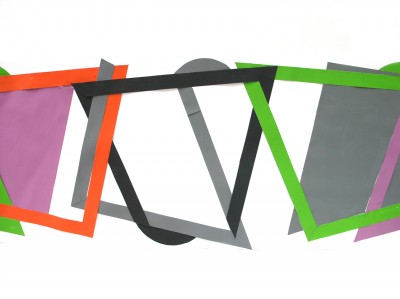
Stills from New Museum

10 Jan 2011


Nam June Paik (1932-2006) was a truly visionary artist. He took Marshall McLuhan literally with regard to the 'Medium is the Message'. An early pioneer of video art  and influenced heavily by John Cage as a performance artist and composer. Paik was one of the most innovative artists of the 20th century and Tate Liverpool, in collaboration with FACT (Foundation for Art and Creative Technology) are presenting the first major retrospective of his work since the artist’s death and the first exhibition of Paik’s work in the UK since 1988.

Nam June Paik at Tate Liverpool showcases around ninety works from all phases of his career, many shown in the UK for the first time, which we should realize is an important  aspect of this exhibition, introducing Paik to a young technology savvy generation for the first time, may have long lasting creative consequences...

The exhibition celebrates Paik as the inventor of 'media art', mixing together through abstraction, diverse media from paint to technology, from low tech to satellite works.  At a time when television was still a novelty, Paik foresaw the future popularity of this new and exciting medium.  Thought provoking works like 'TV Buddha' (1989), explore the clashing cultures of East and West, old and new, while 'Video Fish' (1979-992) considers nature versus the man made, featuring both television sets and live fish in aquariums.

With artworks ranging from scores of early music performances and Paik’s involvement in the Fluxus movement to TV works, impressive robot sculptures and large-scale video installations; Tate Liverpool’s exhibition looks likely to be a memorable show.

The exhibition continues at FACT. Focusing on Paik's innovative use of creative technology, FACT will showcase the major laser installation 'Laser Cone '(1998) for the first time in the UK, along with sixteen single channel video works, including 'Global Groove' 1973 and groundbreaking satellite videos 'Good Morning Mr Orwell' 1984 and 'Bye Bye Kipling' 1986. The 21st Century is here at last....


See the Tate/FACT Nam June Paik trailor here

A similar post on Nam June Paik also appears on Abstraktion.org

8 Jan 2011

Modern British Art in 'Restless Times: Art in Britain 1914-1945'


This is an excellent exhibition of British art on show at the Millennium Gallery in Sheffield until 30th January. It explores the social impact of WWI on the wider society but also how modern art was attempting to break out of the the very conventional visual culture that existed between the wars. This exhibitions shows us through the sculptures and drawings of Henry Moore, the geometric abstract paintings of David Bomberg in his painting 'In The Hold', the famous 'Bird Swallowing a Fish' sculpture by Henri Gaudier Brzeska, and many others, how powerful these works remain nearly a century later.

David Bomberg, 'In the Hold' (c) Tate, London


We must remember how British modern art is a complicated response to our wider connection with the world. On one hand Europe and the other America. We have never totally embraced 'Modernism' as warmly as our European friends did in these intervening decades, we had to somehow 'translate' modernism into our own identity. Hence we have a fusion of styles and processes, from landscapes, figuration and social commentary, through semi-abstraction, a Surreal form of Realism (see below Evelyn Dunbar's, 'A Land Girl and the Bail Bull' 1945) and a strange form of 'British' Cubism that became our form of Abstraction. All these styles never seem to coalesce as a body of work, in the way our French or German counterparts do and yet through exhibitions like this one, we come to understand that this is the beauty of modern twentieth century British art, it is eccentric and eclectic, yet it's honest and innovative.

 
Evelyn Dunbar, A Land Girl and the Bail Bull, 1945 © Tate, London 2010


From the devastating impact of war and a retreat from the harsh realities of life, to the celebration of the pastoral idyll and the embracing of new ideas and technologies, the exhibition examines how artists engaged with both the uncertainties and possibilities of the time. 
We are, some hundred years later, beginning to appreciate our approach to modernity through our modern art, and for that reason this type of exhibition would have travelled well around the country. The Tate and its Great British Art Debate and the Millenium Gallery as well as other regional collections that have lent work, have done well in curating such an interesting and educational exhibition.

Clive Branson, 'Bombed Women and Searchlights' 1940 © The Estate of Clive Branson / Tate, London 2010


'Restless Times' brings together over 150 significant works drawn from national and regional collections including Tate, Norfolk Museums and Archaeology Service, Tyne & Wear Archives & Museums and Museums Sheffield. other works on display are: Cyril Power, 'The Tube Station' (1932), CRW Nevinson, 'Twentieth Century', John Nash, 'The Cornfield' (1918), William Roberts, 'The Cinema' (1920), Clive Branson, 'Selling the 'Daily Worker' outside Projectile Engineering Works' (1937), Barbara Hepworth, 'Mother and Child' (1934), Henry Moore, 'Shadowy Shelter' (1940) and Ceri Richards, 'Blossoms' (1940). The exhibition will also include a number of contemporary works including a new commission by Hew Locke.

Again, it is a shame this exhibition is not touring across the country...

26 Dec 2010

Drawing exhibition 'On Line' at MOMA, NY

        
Julie Mehretu. Rising Down. 2008. Ink and acrylic on canvas, 96 x 144" (243.8 x 365.8 cm). Collection Jeanne Greenberg Rohatyn, New York. Photo by Tim Thayer. © 2010 Julie Mehretu
    
This is an interesting exhibition exploring the development of drawing in the Twentieth Century. Though this exhibition shows a diverse approach it also seems quite conceptual in nature..

Press Release: On Line explores the radical transformation of the medium of drawing throughout the twentieth century, a period when numerous artists subjected the traditional concepts of drawing to a critical examination and expanded the medium's definition in relation to gesture and form. In a revolutionary departure from the institutional definition of drawing, and from the reliance on paper as the fundamental support material, artists instead pushed line across the plane into real space, thus questioning the relation between the object of art and the world. 

On Line includes approximately three hundred works that connect drawing with selections of painting, sculpture, photography, film, and dance (represented by film and documentation). In this way, the exhibition makes the case for a discursive history of mark making, while mapping an alternative project of drawing in the twentieth century. The exhibition includes works by a wide range of artists, both familiar and relatively unknown, from different eras of the past century and from many nations, including Aleksandr Rodchenko, Alexander Calder, Karel Malich, Eva Hesse, Anna Maria Maiolino, Richard Tuttle, Mona Hatoum, and Monika Grzymala.

This is a great gallery for an archive of a variety of 20th Century (and earlier) drawings, etchings and other works on paper. Spaightwood Galleries, USA.

21 Dec 2010

Miro at Tate Modern, London, April 2011

Joan Miro, Head of a Catalan Peasant, 1925 

Press Release: Tate Modern
Joan Miro: The Ladder of Escape

Thursday 14 April – Sunday 11 September 2011
Sunday to Thursday, 10.00–18.00. 
Friday and Saturday, 10.00–22.00. 
Last admission into exhibitions 17.15 (Friday and Saturday 21.15)

Tate Modern will present the first major retrospective of Joan Miró (1893–1983) to be held in London for almost 50 years. Opening on 14 April 2011, Joan Miró: The Ladder of Escape will bring together over 150 paintings, works on paper and sculptures by one of the twentieth century’s greatest artists. The exhibition will draw on collections from around the world to represent the astonishing breadth of Miró’s output. It will also explore the wider context of his work, bringing to light the artist’s political engagement and examining the influence of his Catalan identity, the Spanish Civil War and the rise and fall of Franco’s regime. 

Miró was among the most iconic of modern artists, evolving a Surrealist language of symbols that evokes a sense of freedom and energy in its fantastic imagery and direct colour. Often regarded as a forefather of Abstract Expressionism, his work is celebrated for its serene, colourful allure. However, from his earliest paintings onwards, there is also a more anxious and engaged side to Miró’s practice, reflecting the turbulent political times in which he lived. This exhibition will explore these responsive, passionate characteristics across six decades of his extraordinary career. 

Joan Miró: The Ladder of Escape will examine the artist’s varying degrees of engagement over his lifetime. These are rooted in the complex identity politics associated with Catalonia, as revealed through Miró’s representation of its landscape and traditions. These depictions range across images of rural life, such as The Farm 1921-2 which Ernest Hemmingway bought from the artist in Paris, to the masterly sequence of the Head of a Catalan PeasantAidez l’Espagne and Le Faucheur 1937, as well as more private and troubled responses disguised in the renowned Constellation paintings of 1940, made in the Second World War. The tensions that erupted with the Spanish Civil War in 1935-9 elicited Miró’s explicit protests in 1924-5.

This is in the Tate Collection and is likely to be in the show...
Joan Miro, Women and Bird in the Moonlight 1949
Under Franco’s regime, Miró worked in a kind of internal exile in Spain while cultivating a reputation abroad as a hero of post-war abstraction. Joan Miró: The Ladder of Escape will showcase masterpieces from this era, including the sublime The Hope of a Condemned ManMay 1968 and Burnt Canvas II 1973, or creating euphoric explosions of paint in Fireworks 1974, Miró continued to reflect the political mood in his radical and pioneering practice.  triptych 1973. The exhibition will also reveal how he captured the atmosphere of protest in the late 1960s. Whether blackening or setting fire to his works, such as

Joan Miró i Ferrà was born in Barcelona on 20 April 1893 and trained as an artist at the Galí Academy from 1912-15. From 1923, he spent part of each year in Paris and became a key figure in the Surrealist movement. With his young family he remained in France during the Spanish Civil War, but returned to Spain when the Germans invaded in 1940. Miró settled in Majorca and remained based there for much of the rest of his life, travelling for major commissions and exhibitions around the world. He died at home on 25 December 1983. 

Joan Miró: The Ladder of Escape is co-organised by Tate Modern and the Fundació Joan Miró, Barcelona, where it will be seen in October 2011, before travelling to the National Gallery of Art, Washington in May 2012. The exhibition is conceived by Tate curators Matthew Gale, Marko Daniel and Kerryn Greenberg in collaboration with Teresa Montaner, curator at Fundació Joan Miró. Rosa Maria Malet, Director, Fundació Joan Miró, and Vicente Todolí, former Director, Tate Modern, are consultants.


Photographic essay: Wall Surfaces


Mondrian in Paris at the Centre Pompidou

Piet Mondrian, "composition en rouge, bleu et blanc II", 1937
© Mondrian / Holtzman trust, coll. Centre Pompidou, RMN
A new retrospective exhibition at Centre Pompidou in Paris, re-assesses the legacy of Mondrian and De Stijl. Amazingly this is the first exhibition of Mondrian to truly assess his influence on twentieth century art, especially with his ideas regarding Neo-Plasticism to be held in France. The exhibition explores his commitment to painting from the early years of the twentieth century, through his ground breaking developments with De Stijl combining his ideas on Theosophy with other artists, Theo Van Doesburg and Gerrit Rietveld. They created such a strong social understanding of the role art can play, especially abstraction, in society. His legacy remains not only in abstract paintings of a geometric and reductive style, but also in 'concret' sculpture, city planning, architecture, furniture design and graphic design.  You may be interested in an article by Simon Schama, where he has written a review entitled 'Driven to Distraction' in the Financial Times on 17th December 2010. In this he explores the photographs of his studio taken by Andre Kertesz (see below), but also Schama states: 

'But don’t go looking for it in this otherwise exhaustive and glorious show which is, after all, a heartfelt celebration of the modernist furnace that once was Paris – even if it took someone as resolutely Dutch as Piet Mondrian to distil abstraction from its fizzing alembic.'

Andre Kertesz, 'Chez Mondrian' 1926

The photo above is a well known photo, but the photo below shows his studio interior and his bed, it defines clearly the simplicity in which his life was lived, also expressed so clearly through his work.
Andre Kertesz, 'Mondrian's Studio' 1926
 The exhibition runs through until 21st March 2011 at the Centre Pompidou in Paris.


9 Dec 2010

Modigliani exhibition in Prague


All films on artists never work because they cannot catch the visceral nature of the artwork, especially painting, but Andy Garcia gives it a go, great atmosphere and contemporary music.

Modigliani in  Prague is organised by the Gallery Vernon.

There is a new exhibition of Modigliani in Prague from December 2010. This which will be the first solo exhibition of his works in the Czech Republic, will be officially opened in Prague's Municipal House Wednesday. The event, which opens to the public on Thursday and it will run through February 28, 2011, is one of the most expensive exhibitions in Prague. The exhibition will present over 60 exhibits, including Modigliani's drawings and oil paintings along with photographs and other documents from his life. Among the most valuable oil paintings are 'Student', 'A Portrait of Marevna' (Russian cubist artist) from 1919 as well as the portraits of artist 'Celso Lagar' (1915) and 'Dr Francois Brabander' (1918).

Left, Modigliani, middle, Picasso and on the right Andre Salmon
 Only a couple of Modigliani's paintings were displayed in the National Gallery in Prague in the past. Curator Serena Baccaglini said her aim was to present Modigliani in connection with the work of Czech-born artist Frantisek Kupka (1871-1957), a pioneer of abstract art. She was inspired by a photograph from a joint exhibition of both artists in Paris in 1912. The exhibition in the Municipal House will therefore also offer some paintings by Kupka from private collectors.

'Red Nude' Modigliani, 1917. This is a classic, bit it's not in the show
 What can you say about Modigliani? He is one of those artists that has become a myth, you either came out of Paris in the early Twentieth Century a star or in a coffin, and Paris was littered with those. Unfortunately, his success came after his death. There is a charged eroticism to his nude figures that still retains much of the Bohemian Paris that he was a part of in the Batou Lavoir studios in Monmartre. Along with Egon Scheile they somehow express an emotional representation of the artist's desire...? Modigliani died of Tubercular Meningitis in 1920

3 Dec 2010

Modernist home for rent, anyone? High Cross House, Dartington, Devon, UK

High Cross House, Dartington Estate, 1932
This modernist building called High Cross House, built in 1932 by the Swiss architect William Lescase for Leonard and Dorothy Elmhirst (members of the Bloomsbury Group), the patrons who established Dartington Hall and the College of Art. This is one of the best examples of modernist architecture in the UK. Built in the grounds of the Dartington estate, in prime Devon countryside. Inspired by the De Stijl movement and Le Corbusier with Bauhaus furniture: 

"Probably the most extreme instance in England of the functional type of house associated with the name of Le Corbusier." Christopher Hussey, Country Life, 1933

Dartington Hall was, for some time,  a significant meeting point for the international avant-garde. Artists such as John Cage taught there and the Abstract Expressionist painter Mark Tobey came from the West Coast of the United States to Dartington Hall and along with the St.Ives ceramicist, Bernard Leach travelled to Japan, where Tobey spent a year in a Zen Monastary in Kyoto. A rich history....                                                                                                   
                                                                                                    .....and Now                   

It is currently for rent for £2,500 or £600 a week, but you will have to be a fan of such modernist buildings, there is plenty of space and glass in this 4 bedrooms, roof terraced  and flat roofed home, originally built for the head masters. It has an Art Deco interior  and a great study with a curved glass wall. Look for more information on themodernhouse.net

High Cross House by Michael Young

The building is for rent because Dartington College of Art has now merged with University College Falmouth.

27 Nov 2010

James Turrell at Gagosian Gallery, London, UK

Abstraction's evolution in the of James Turrell at Gagosian, London until 10th December 2010. 

James Turrell, Sustaining Light, 2007
Wood, computerized neon setting, glass piece
Aperture: 62 1/4 x 46 1/2 inches (158.1 x 118.1 cm)

 (C) James Turrell/Gagosian Gallery

 
'Through light, space can be formed without physical material like concrete or steel. We can actually stop the penetration of vision with where light is and where it isn't. Like the atmosphere, we can't see through it to the stars that are there during the day. But as soon as that light is dimmed around the self, then this penetration of vision goes out. So I'm very interested in this feeling, using the eyes to penetrate the space.' James Turrell

6-24 Britannia Street
London 
WC1X 9JD
Hours: Tue-Sat 10-6

If you haven't seen Turrell's work here is a video:


21 Nov 2010

Kurt Schwitter's: Still crazy after all these years...

It is remarkable to see how influential Kurt Schwitters remains in the 21st Century. There are a number of contemporary exhibitions on the work of one of the 20th Century's most remarkable artists. He has influenced British art, and especially abstraction, a great deal.

Kurt Schwitters, Untitled, (c) The Menil Collection, Houston, USA
Schwitters, who helped to define avant-garde art through his work with German Dada in Hanover, (after a falling out with the Berlin Dadaists), brought Dada practices to a wider audience through his 'merz' constructions of collage, photo-montage and found objects, such as tram tickets, newspaper adverts and fashion illustrations. Also he created three domensional constructions, his most famous being known as the 'Merzbau' or 'The Cathedral of Erotique Misery' (see below). He also developed innovative experimental typographic design through his 'Merz' publications with the Constructivist El Lizzitsky and Theo van Doesburg of De Stijl

Kurt Schwitters performing his 'Urlauten',/'Ursonate' c.1920's
The 'Ursonate', his phonetic sound poem from 1922–32 (a translation of the title is 'Primeval Sonata'), is still seen as an unusual and evocative performance piece, still performed around the world. Perhaps we have understood the influence of Schwitters more through the artists who have been influenced by him after WWII, such as Robert Rauschenberg, Jasper Johns, Cy Twombly, Ed Ruscha, Damien Hirst, amongst many others.

Their are two shows/explorations currently exhibiting his work:

Exhibitioin in USA:
The Menil Collection, Houston, Texas, (the great American collection of modern art), this exhibition explores Schwitters use of colour and light in his work on both paintings and collage. Kurt Schwitters: Color and Collage, is until 30th January 2011 and its emphasis is on the Merz works from the 1920s and 1940s. 
Kurt Schwitters, 'For Kate',1947
This is the first show of Schwitter's works since the 1985 exhibition at MOMA. The exhibition will travel the US to Princeton University Art Museum March 26–June 26, 2011, followed by Berkeley Art Museum, Pacific Film Archive from August 3–November 27, 2011. 

Exhibition in the United Kingdom:
The other exhibition or perhaps exploration and celebration of his work is the British organisation that has been set up to archive and preserve his little known works in Britain, where he was eventually interned and died in Ambleside, Cumbria. One of his last Merzbau's is celebrated on the website: http://www.merzbarn.net. This construction made in a remote barn in the Langdale Valley and was created during his stay in the Lake District, yet financed by MOMA in New York, is now preserved at the Hatton Gallery, University of Newcastle by the artist Richard Hamilton in 1965. You can see the documented reconstructions in 2007, of his Hanover Merzbau here from the Tate archive. This is a great organisation celebrating his art, preserving his legacy and raising funds for the upkeep of his last remaining Merbau. Schwitters died in 1948. Kurt Schwitters still crazy after all these years....


Kurt Schwitters,'The Cathedral of Erotique Misery', Hanover, Germany


Kurt Schwitters, 'Merzbarn', Cumbria UK

5 Nov 2010

Patrick Heron by Janet Street-Porter on The Genius of British Art: Modern Times, C4

It was great to see the broadcaster, Janet Street-Porter on The Genius of British Art on Channel 4, discuss how she came to understand modern art, meeting Heron's daughter Katherine Heron when studying architecture. There is a great moment on the programme where they cut between him in his studio at Porthmeor Studios, he died in 1999, probably in the early 1980's and her stitting there now some 30 years later remembering when she would sit and talk with him about art and watch him painting, it was really quite touching..

Yellow Painting: October 1958 May/June 1959  Oil on canvas, 1524 x 2138 x 30 mm
 Purchased with asistance from Tate Friends St Ives 1999 (c) Estate Patrick Heron

Janet Street-Porter and Katherine Heron discuss this painting which has to be one of his most significant works, I believe this is in Tate Modern or Tate St.Ives... 

 
In the programme she went on to argue how Heron's work of that time was such an antidote to the the dull post war paintings of Lowry and Bratby. My frustration is that we have not understood that British abstraction and especially the 'St.Ives School' have never had the recognition for its significance, when considering how little was taking place in London at the time, which was 'kitchen sink' and a dull form of British (English?) expressionism. Street -Porter goes on to say how Heron's abstractions said 'bollocks to complancy'. It was a great little bit of British televison...

29 Oct 2010

Painting against Mussolini: Art and the Fall of a Dictator, Estorick Collection of Modern Italian Art, London

Estorick Collection of Modern Italian Art in London, from 22nd September - 19th December 2010

these dark painting from Mafai and Garelli are worth seeing. we are often more aware of the painting from this period of Max Beckmann and other New Objectivity paintings that stood against Fascism than Italian painting from that time. They should be appreciated more and still retain much of the original power all these years later worth a trip to North London...

Mario Mafai, Fantasia - Interrogation, 1941-43


                                                           Franco Garelli, Shooting, c. 1944

27 Oct 2010

Floris Neususs 'Nudo-grams' @ Shadow Catchers exhibition, V&A Museum, London


This is a fascinating exhibition exploring the concept of shadows through a varirty of approaches. well worth looking at, it is a cross between 19th Century ideas in science and technology with a radical 20th Century experimental idea of art-making. this would be a good companion exhibition to the Eadweard Muybridge at the Tate in London.

Floris Neusüss

Born Lennep (Germany), 1937. Floris Neusüss has dedicated his whole career to extending the practice, study and teaching of the photogram. Alongside his work as an artist, he is known as an influential writer and teacher on camera-less photography.

Neusüss brought renewed ambition to the photogram process, in both scale and visual treatment, with the Körperfotogramms (or whole-body photograms) that he first exhibited in the 1960s. Since that time, he has consistently explored the photogram's numerous technical, conceptual and visual possibilities.

His works often deal in opposites: black and white, shadow and light, movement and stillness, presence and absence, and in the translation of three dimensions into two. By removing objects from their physical context, Neusüss encourages the viewer to contemplate the essence of form. He creates a feeling of surreal detachment, a sense of disengagement from time and the physical world. Collectively, his images explore themes of mythology, history, nature and the subconscious.

7 Oct 2010

'Throwing Shapes' @ Coleman Project Space and Cafe Gallery, London

7 October - 7 November 2010

This is an interesting exhibition of a group of diverse artists working with abstraction in London. Defining 'hard-edge' abstraction in its diverse forms from installation to raw canvas. Here's the blurb, not sure how much I believe... Coleman Project Space presents a two-venue initiative curated by Rebecca Geldard with Vanessa Jackson, Clare Goodwin, Alasdair Duncan and Kilian Rüthemann.

'Jan & Dan', Claire Goodwin, 68 cm x 50 cm, Medium: Mixed media, Catalogue No: CGP1259

'Throwing Shapes' is a group exhibition on the itinerant nature of abstract painting’s core motifs. The conversational starting point for this colourful dialogue between venues, and works in various media, is a large-scale wall-painting commission by Vanessa Jackson at CGP London’s Cafe Gallery.
While the title elicits the notion of sharply defined forms flung, or Modernist-indebted visual strategies, it also references dance and music. ‘Throwing shapes’, like the term ‘abstract’ for an art context, has become a generic expression. It is now synonymous with human movement to music/sounds of all kinds but was initially used to describe the repetitive physical actions associated with electronic dance music: a simple sign language for those under its influence.


  • Vanessa Jackson, Dimensions not supplied, Medium: Installation, Catalogue No: CGP1248
This sense of reduction and recycling of forms and trends - given the recent nu-rave revival traceable through music, art and fashion, for example - is key to the exhibition remit. 'Throwing Shapes' does not attempt to survey the new, however, or plot fixable paths between the past and present, rather identify some curious conceptual territories emerging from artists’ re-negotiation of these basic forms; locate points at which specific aesthetic languages shift, mutate or break down.

Alasdair Duncan’s “signs for the future” pitch the viewer between the language of propaganda, painting and the perfunctory signage of everyday life. The London-based artist’s colour-rich, optimistic motifs, borrowed equally from the Bauhaus as the Highway Code, will appear here in two site-specific vinyl and sculptural works at Coleman Project Space.

Zürich-based Clare Goodwin also mines the past in a strangely positive way, her human-titled paintings conveying both the gritty reality of an era and sense of nostalgia one can have for a time that is not their own. Seventies design graphics and Op-art strategies appear rudely cropped into seductively hard-edged, conceptually adulterous compositional unions.

It makes perfect sense that Vanessa Jackson’s ritual play on canvas with geometric systems should find its way onto public surfaces given her interest in the democracy of mathematical approaches to art. Where Jackson’s ambitious three-floor mural for Sadler’s Wells in 2008 provided a lyrical framework for the performative dimension of the site, here the big white box of CGP London will become test-cell for the optical and kinetic possibilities of forms placed “arm-in-arm, hip-to-hip” in space. 

Swiss artist Kilian Rüthemann is known for his minimal, mostly temporary sculptural alterations to architectural spaces. For this, Rüthemann’s first London exhibition, the Basel-based artist will show a film in Coleman Project Space’s acclaimed Shed Space. Here, the virtual realm of the computer program provides the contextual fabric for his study of line and form as dictated by the flight paths of birds at sunset.

Times: Thursday - Sunday from 12 - 5pm.

5 Oct 2010

Gerhard Richter at New Walk Art Gallery, Leicester

Gerhard Richter, Abstract Painting, 1994, 225 cm x 200 cm,
Oil on canvas, Catalogue Raisonné: 809-3 © Gerhard Richter 2010.

Any excuse to see a Richter show in the UK. Here is an interesting exhibition in Leicester. Have a read of the press release below:

ARTIST ROOMS
Epoch - 
Gerhard Richter
2nd October 2010 - 27th February 2011
New Walk Museum & Art Gallery
(In partnership with The City Gallery)

'The German artist Gerhard Richter is considered to be one of the most important living painters in the world. Over a career spanning more than half a century, Richter has exhibited work in every major gallery in the world from The Museum of Modern Art in New York to Tate Modern in London. His influence on the next generation of artists such as Damien Hirst has been enormous.

Much of his work has been an exploration of the ways in which photography has changed the nature of painting over the twentieth century. In some of his first paintings to become famous he created ‘photo-realistic’ images that reproduced the blurring of photographs.

This exhibition, entitled Epoch, is taken from ARTIST ROOMS, a new national collection established by the dealer and collector Anthony d’Offay, jointly owned by Tate and the National Galleries of Scotland. The exhibition also includes a selection of the artist’s multiples, lent by Anthony d’Offay especially for this presentation.

The largest work (48 Portraits) captures many of the themes of interest to Richter including history, painting and portraiture. This key piece is shown alongside several other significant works that show Richter’s diverse practice, from further portrait painting to more abstract images, photographs and prints. 

Through this range of works, Epoch gives an insight into one of the most important artists of the twentieth and twenty-first centuries. Anthony d’Offay was brought up in Leicester with New Walk Museum & Art Gallery providing a place of inspiration during his childhood.'


The British painter Dexter Dalwood is nominated for Turner Prize 2010

The fascinating painter Dexter Dalwood, who has always shown an original approach to painting, often using unusual political icons and their houses/rooms as a reference point in his work, has been nominated for the Turner Prize along with the painter Angela De La Cruz.

Dexter Dalwood, Greenham Common 2008,
(c) Dexter Dalwood, Gagosian Gallery Associates. Photo: Prudence Cumming Associates
Dexter Dalwood was born in Bristol, England in 1960. He studied at Central St.Martins, London and at the Royal College of Art, London. Dalwood has been nominated for his solo exhibition at Tate St Ives which revealed the rich depth and range of his approach to making painting that draws upon historical tradition as well as contemporary cultural and political events.

29 Sept 2010

Pretty in Pink-The paintings of Rick Butler of The Psychedelic Furs


'Nature is Boring', A joint show by Richard Butler and the New York based sculptor Emil Alzamora is from Thursday 7th October to 1st November 2010 at Mauger Modern

Richard Butler before forming the new wave band, The Psychedelic Furs in 1977, had originally studies fine art at Epsom School of Art and Design. You can't take art school out of a an aging rock star, and over the past ten years he has returned to it with a passion. His works explores a subtle understanding of figurative painting, seemingly light in atmosphere, almost Japanese in temperament, his paintings show an aware of  developments in painting in contemporary art in the 21st Century. His cult celebrity status has ensured Butler has received some acclaim for his paintings, and has had gallery exhibitions in New York, Miami, Florida and Florence, Italy.

Maugar Modern, 81 Rochester Row, London SW1P 1LJ

21 Sept 2010

Egon Schiele's troublesome paintings at 'Treasures of Budapest' Royal Academy, London

 Egon Schiele, 'Two Women Embracing', 1915, Pencil, watercolour, gouache. 48.5 x 32.7 cm. 
Museum of Fine Arts, Budapest

In his article on Schiele's paintings of nudes at the Royal Academy exhibition 'Treasures from Budapest'; Jonathan Jones explores some interesting ideas regarding modern art and sexuality. Click here.


'His work has a specific presence, aggressive, unignorable, practical. They are pornographic. They insist that the erotic is as great and heroic a subject as wars or religion. And they question whether art has to confine itself to representing life second-hand. That's what is extraordinary about Schiele's art: it does not comment on life, it takes part in life. It is not like pornography. It is pornography. It is also high and serious art, a doubleness that may only have been possible in Vienna on the eve of the first world war.' 


Schiele's window on his erotic private desires was short lived. By 1907, while Schiele was still a student, Pablo Picasso, around 19 years of age in Paris, painted 'Les Demoiselles d'Avignon', a full-frontal, jagged, spatially modern painting, exploring his own desires and also using prostitutes as modeIs. Within a few years abstraction was to establish itself as one of the major discoveries of the Twentieth Century. Marcel Duchamp's readymades, Kasimir Malevich's 'Black Square', the Dadaists and their use of politics and collage were to change how we use and think of the figure. In this context Schiele's paintings of sexuality look almost innocent.